
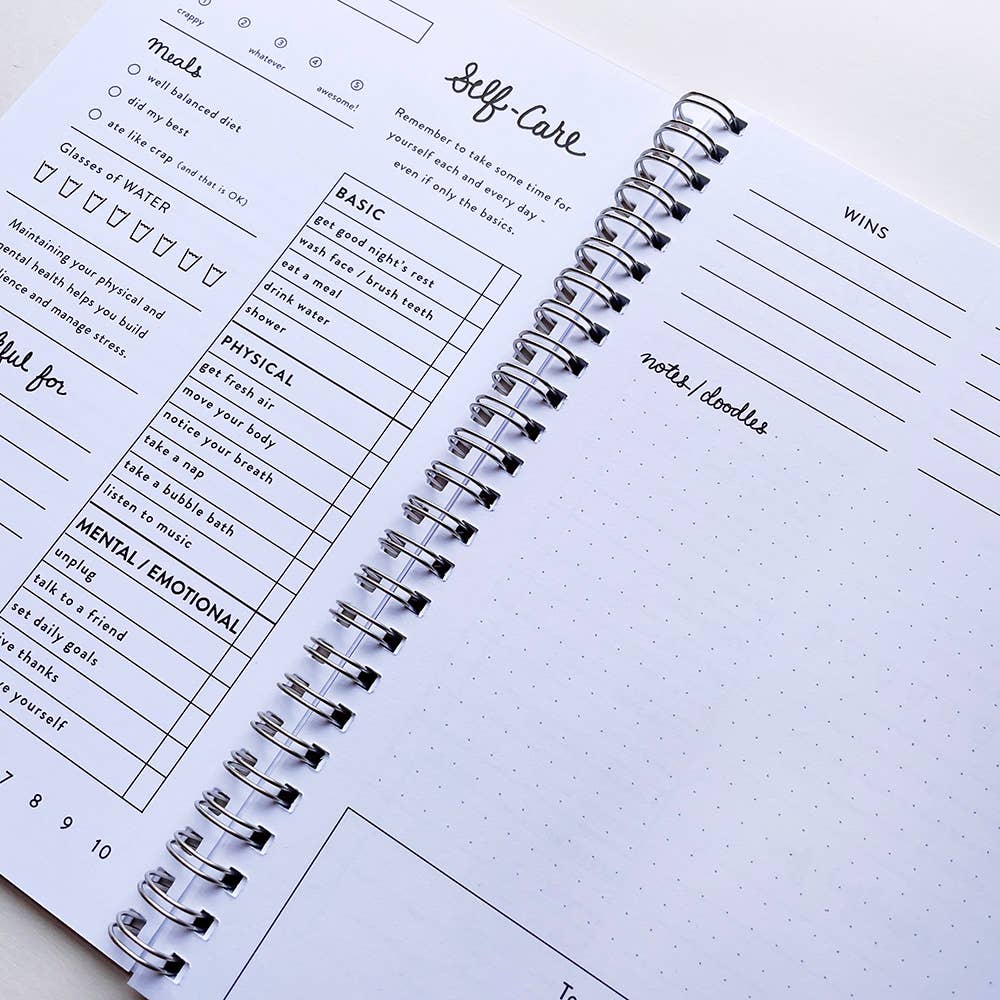
Health Journal: Track, Change & Transform Your Well-Being
Ever felt like you’re doing your best to eat well, sleep enough, and manage stress — but something’s still off? A Health Journal could be the missing piece. It helps you turn vague feelings into clear patterns and actionable goals.
Most articles out there cover the benefits, maybe a few prompts, but they don’t often dive into how to build a sustainable journal routine, how to derive insights (not just logging), how to use digital + analog together, and how to integrate with medical care. We will cover all that — and more.
Table of Contents
What is a Health Journal?
A health journal (or wellness journal / daily health log) is a tool where you record data and reflections about your physical, mental, and emotional well-being. It may include meals, sleep, symptoms, mood, stressors, medications, workouts, hydration, etc. The goal is to track progress, identify patterns or triggers, and help you make healthier decisions.
It’s not just for people with existing health issues — anyone who wants more clarity and control over their wellness can benefit.
Why a Health Journal Matters (Beyond the Usual Benefits)
Many articles mention better sleep, stress relief, or accountability. That’s true. But here are lesser-known or less-emphasized gains that often get left out in competitor content:
- Early signal detection: spotting anomalies (changes in mood, pain level, energy) before they escalate.
- Medication & treatment tracking: knowing side effects, missed doses, improvements over time.
- Mind-body correlation: linking mental/emotional states to physical symptoms (e.g., stress causing digestive issues, poor sleep worsening mood).
- Support communication: having accurate entries when seeing a specialist (doctor, therapist, nutritionist).
- Sustained behavior change: not just setting goals but seeing what environmental or habitual tweaks work for you.
Evidence & Research
- Journaling helps reduce stress, depression, anxiety, and increases feelings of well-being.
- It helps with physical health outcomes: lower blood pressure, improved immune response, faster healing.
- Identifying triggers (for e.g. headaches, food sensitivities) more accurately.
Types of Health Journals & Tracking Methods
Different people will prefer different formats. Here are common types plus some hybrid ones many competitors don’t cover in depth:
| Type | What It Focuses On | Best If You… |
|---|---|---|
| Symptom & Pain Tracker | Daily entries on pain, discomfort, symptoms, their severity | Have a chronic condition or frequent symptoms, want to track medical interventions |
| Nutrition & Meal Log | Food, timing, portion, how you felt after eating | Want to improve diet, manage allergies, track weight |
| Sleep Journal | Bedtime, wake time, quality, disturbances, dreams | Struggle with insomnia or irregular sleep |
| Mental & Emotional Health Journal | Mood, stress, triggers, coping strategies | Want to manage anxiety, depression, or improve mental resilience |
| Fitness / Movement Tracker | Type, duration, intensity of workouts, movement breaks | Looking to improve fitness or stay active |
| Hydration & Wellness Log | Water intake, supplements, vitamins, self-care | Want holistic wellness beyond exercise & food |
| Medication & Treatment Journal | Meds, dosages, side effects, efficacy | On medication or undergoing treatment; want reliable record |
Competitor posts often pick one or two of these but don’t show how to combine them in a custom template that works for your lifestyle.
Key Features & Sections to Include
To build a health journal that’s more than just wishful thinking, make sure your journal includes:
- Date & Time
- Sleep: hours, quality, wakeups, bedtime routine
- Nutrition: meals + snacks, times, portion sizes, gut reaction, food sensitivities
- Hydration & Supplements: amount, timing, any reactions
- Physical Activity / Movement: type, duration, perceived exertion
- Medications & Treatments: name, dosage, time, side effects, adherence
- Mood & Emotional State: mood rating (0-10 or emojis), stressors, coping actions
- Symptoms / Physical Reactions: pain, discomfort, fatigue, any symptoms for chronic illness
- Environmental & Lifestyle Factors: screen time before bed, alcohol/caffeine, travel, weather
- Reflection & Gratitude: what went well, what bothered you, gratitude for health or improvements
Also include:
- Weekly Summary: trends, what improved, what got worse, what to change
- Monthly Review: compare with previous months; set new health goals
- Alerts/Check-ups: reminders to talk to doctor, get lab tests, follow-ups
Daily, Weekly, Monthly Routines: How to Journal Without Burnout
A big gap in many blogs: how people can keep up journaling without giving up quickly.
- Daily routine: pick one fixed time (morning or evening). Use habit stacking (e.g., journal right after morning coffee or before brushing teeth).
- Use small entries: even 3-5 minutes counts. It’s okay if some fields are missing.
- Weekly catch-ups: pick one day (e.g., Sunday) to fill in summary and trends.
- Monthly review: reflect, celebrate progress, adjust.
- Flexible format: allow room for free writing when needed; some days more numeric, others more emotional.
Health Journal Prompts & Examples
Here are prompts & examples to help both logging and deep reflection. Competitor content often stops at generic prompts; I’ll include specific ones that prompt medical, nutritional, emotional, and holistic reflection.
Sample Daily Prompts
- What’s one thing I did today that moved me toward better health?
- Did I have any pain, discomfort, or symptom today? When did it start, what preceded it?
- What did I eat, and how did it make me feel after 30 minutes?
- How many hours did I sleep? Did I wake up during the night?
- How hydrated was I? Did I have any supplements or meds? How did they affect me?
- What stressors were present today, and how did I cope?
- What am I grateful for about my body and my health?
Weekly / Monthly Prompts
- What patterns did I notice this week (sleep, mood, food)?
- Which habit helped me most? Which one dragged me down?
- What goals do I want to set for the coming week/ month?
- Were there any side effects from treatments or medications?
- What changes will I make next week to improve health (sleep, nutrition, stress)?
Digital vs Paper: Pros, Cons & Hybrid Approach
Many competitors promote either paper journals or apps but don’t compare them or suggest hybrid use.
| Medium | Pros | Cons | Hybrid Ideas |
|---|---|---|---|
| Paper / Physical Notebook | tactile, less screen exposure, easy to draw/scan, creative | not searchable, bulkier, risk of loss or damage | Use paper for emotion-rich entries + printouts, then transfer numeric data to digital for trend graphs |
| Digital Tools / Apps | easy to calculate weekly/monthly stats, reminders, cloud backup, graphs | screen fatigue, cost, dependency on battery | Use digital for tracking sleep/fitness, paper for reflections + gratitude + free writing |
| Hybrid | best of both | needs more effort to sync, might cost more | color code: paper entries scanned, or sync manually once a week; use app suggestions based on paper reflections |
Using Your Journal in Medical / Professional Settings
A big missing piece in many health journaling guides: how to bring your journal to medical care (doctor / therapist / specialist).
- Keep your logs clean and clear (dates, times, symptom severity).
- Use your weekly / monthly summary to show not just data, but your reflections: what you think might trigger symptoms.
- Use the health journal to ask better questions (“I’ve noticed when I eat X I get headaches. Should I test for allergy or keep a symptom diary?”).
- Bring your journal to appointments so you and your provider have a shared reference.
Review & Reflect: How to Pull Out Insights
Logging is just one part. Reflection is what leads to change.
- Trend spotting: graph or chart some data (sleep vs mood, activity vs energy, food vs symptoms) to spot correlations.
- Highlight successes & failures: What changed? When? Why?
- Adjust goals: if something isn’t working, tweak it (not give up).
- Set micro habit experiments: e.g. try reducing caffeine, increasing hydration, or adjusting bedtime for one week; see effect.
FAQs
Q: How often should I journal?
A: Daily for basic tracking; weekly for summary; monthly for reflection. Even 3–5 minutes daily is better than doing nothing.
Q: What if I miss days?
A: That’s totally fine. Don’t beat yourself up. Use weekly catchups to fill gaps or note what you remember. Journaling is a tool, not a chore.
Q: Do I need special tools or expensive apps?
A: No. A simple notebook or free digital tool works just fine. What matters is consistency + reflections. If you want graphs, reminders, or shareable reports, then an app helps.
Q: Is health journaling safe if I have mental health issues or trauma?
A: Journaling can bring up difficult emotions. If that happens, stop and seek help (trusted friend, professional). Use prompts gently, maybe focus more on gratitude or basic symptom logging until you feel ready.
Final Thoughts & Getting Started
If you want to start a health journal today, here’s your 5-step plan:
- Pick your format (notebook, app, hybrid)
- Choose 3 core things to track (e.g. sleep, mood, nutrition) so you don’t overload
- Set a fixed time daily (morning or evening) to log — habit stack it
- Use prompts to guide reflection (use any from above)
- Review weekly / monthly and adjust — celebrate wins, tweak your plan
With a health journal like this, you move from vague “I want to be healthier” thoughts toward real awareness, discovery, and change. The power is in both the numbers and the feelings — the tracking and the reflecting.
Use this guide to build a health journaling routine that is sustainable, informative, and transformative.